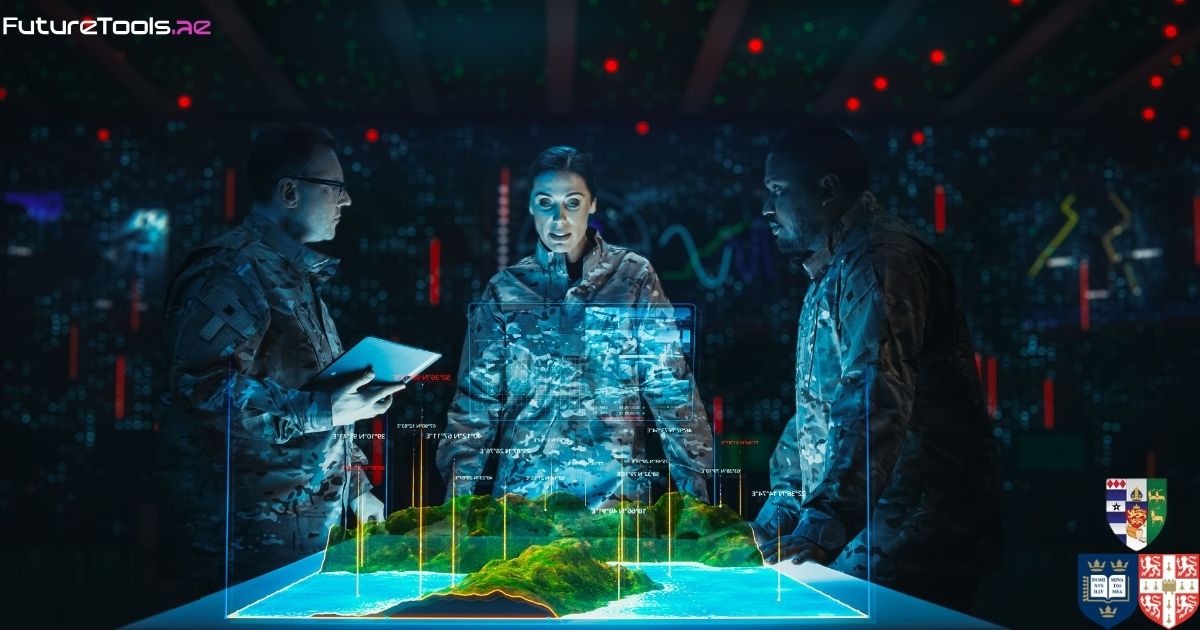
The United Kingdom is investing in the power of artificial intelligence with a bold ambition: to build an AI army ready for the security challenges of tomorrow. Leading the charge is the University of Lincoln, now at the helm of a £1 million Ministry of Defence initiative that unites the sharpest minds from seven universities, including Oxford and Cambridge.
This isn’t just an upgrade for the military — it’s a complete rethink of what defense means in an era of intelligent machines. Lincoln’s new role echoes that of an army AI integration center, drawing on its expertise in AI for agriculture and pivoting those robust algorithms for use in the military. These advanced systems are being adapted to help the Ministry of Defence UK respond to cyberattacks, terrorism, and environmental crises more effectively than ever before.
A key part of the project is testing AI in the military using cutting-edge wargaming simulations. Here, both humans and machines strategize, looking for ways to outmaneuver the opposition and safeguard national security. These digital exercises will bolster the Ministry of Defence’s ability to act decisively, whether on the battlefield or in responding to major incidents at home.
Professor Fiona Strens said the project will build on AI tools first developed for Lincolnshire’s food industry, now adapted to solve defence problems.
She added that since AI evolves quickly, the Ministry of Defence needs fresh research to keep up.
The project is closely aligned with Ministry of Defence land priorities, focusing on both military and civilian applications, from smart troop deployments to crisis management for emergency services. Lincoln, already working with over 80 AI companies thanks to its regional tech ecosystem, is demonstrating how local innovation can have a global impact.
At FutureTools.ae, we believe this collaboration is just the beginning. The Ministry of Defence will benefit from fresh research and nimble AI tools, providing a blueprint for how public institutions can innovate quickly to stay ahead. By embedding technology at all levels from command centers to frontline responders the UK is showing what’s possible when universities, startups, and government work together.
Stay tuned to FutureTools for ongoing insights into how AI, big data, and advanced simulations are transforming national security. With projects like these, the future of defense won’t just be about manpower — it’ll be about smart power.