The United Arab Emirates is no longer content to rely on imported AI technology. At the Machines Can Think Summit 2026, the Mohamed bin Zayed University of Artificial Intelligence (MBZUAI) announced that it will release K2‑V2, a 70‑billion‑parameter large language model developed entirely within the UAE. This marks the first fully sovereign large language model (LLM) in the nation’s history and a major milestone in its plan to build a national “AI factory” that can produce and deploy AI systems at scale.
The K2‑V2 model builds on earlier work such as K2 Think, a 32‑billion‑parameter reasoning model released in 2025. K2 Think demonstrated that small, smart models can achieve state‑of‑the‑art reasoning by combining chain‑of‑thought training, agentic planning and reinforcement learning. With K2‑V2, MBZUAI has dramatically scaled up this approach while committing to a 360‑open philosophy: the weights, data composition, training recipes and checkpoints are all public. This openness allows developers to audit and reproduce the model, unlike many competing systems.
K2‑V2 is more than just a bigger model. According to the MBZUAI technical report, the model:
K2‑V2’s development follows the success of K2 Think, a 32‑billion‑parameter reasoning model released in September 2025. K2 Think demonstrated that smart training could make a small model competitive with much larger systems. For example, it scored 81 % on the American Invitational Mathematics Examination and performed well on coding and science tasks. It uses long chain‑of‑thought examples, reinforcement learning with verifiable rewards and test‑time scaling to improve reasoning. K2 Think’s openness (weights, data and deployment code) set the stage for the 360‑open approach now embodied by K2‑V2.
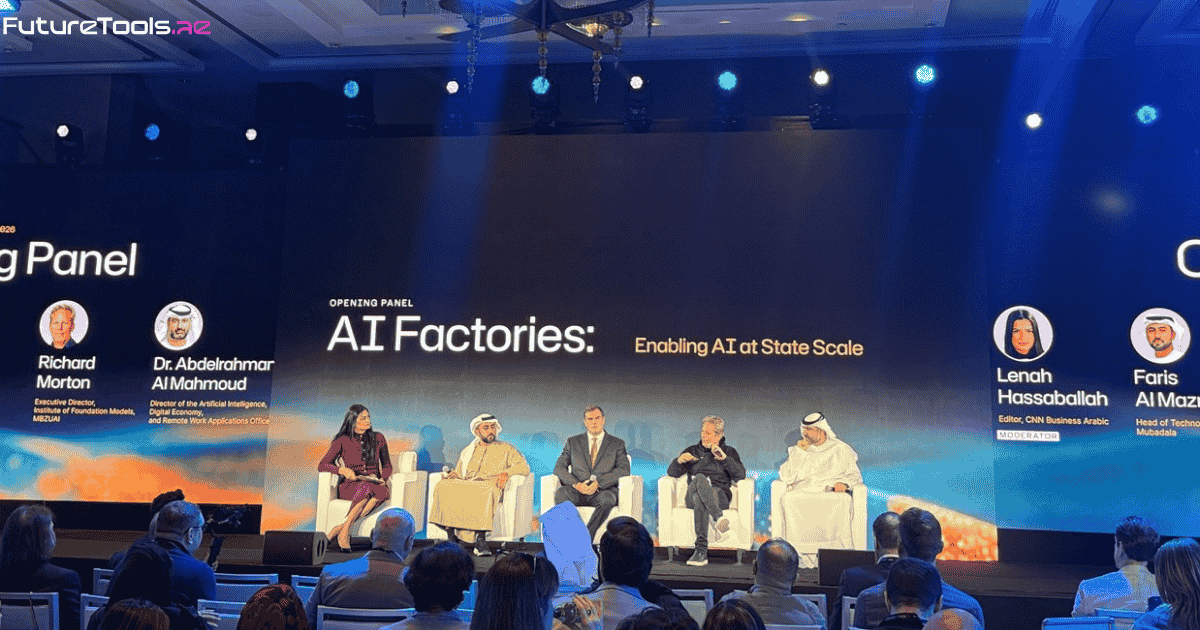
The UAE’s move toward sovereign AI is about more than technological pride. Richard Morton, Managing Director of MBZUAI’s Institute of Foundation Models, explained that K2‑V2 will be the UAE’s base model “which is going to train all other models”. By retraining downstream systems like the K2 Think reasoning model on K2‑V2, the UAE now has a fully domestic stack from base model to specialised layer. Morton described this as a fundamental part of the country’s AI infrastructure one that shifts from merely hosting compute to actively generating intelligence.
The sovereignty push also has geopolitical and economic dimensions:
MBZUAI and its parent company G42 envision a two‑layer AI factory:
| Component | Function | Evidence |
|---|---|---|
| Token Factory | A massive data-centre layer that produces AI tokens at scale effectively the raw currency of machine intelligence. The Stargate UAE cluster will deliver 1 GW of compute capacity as part of a 5 GW campus. with a target of 60 trillion tokens annually. |
Reuters reports that a 10-square-mile AI campus is being built in Abu Dhabi. using Nvidia’s Grace Blackwell GB300 servers, with the first 200 MW phase scheduled for 2026. |
| Agent Factory | A layer focused on building AI agents that solve real-world problems. G42 plans to deploy billions of agents. across sectors like energy. cybersecurity and agriculture, augmenting rather than replacing human workers. |
G42 CEO Peng Xiao outlined this two-factory concept in a LinkedIn discussion, noting that AI users will actively co-create and shape the technology’s evolution. |
This dual approach mirrors Nvidia’s vision of AI factories data centres that convert tokens into actionable intelligence. By controlling both the token supply and agent deployment, the UAE hopes to become a global hub for AI services, offering compute and models to other nations.
For developers, K2‑V2 offers a rare combination of performance and transparency. The model’s open weights and training logs mean that companies can audit it for bias, reproduce its results and fine‑tune it for industry‑specific tasks. Because the model emphasises reasoning and long‑context understanding, it is well suited for:
Enterprises can leverage K2‑V2 as a transparent alternative to proprietary frontier models. While closed systems like GPT‑4 or Gemini may lead in raw performance, K2‑V2 offers reproducibility and sovereignty qualities important for regulated industries or national strategies. As the model becomes integrated into the UAE’s AI factory, expect more public checkpoints, fine‑tuning recipes and community‑driven improvements.
The release of K2‑V2 signals a new phase in the UAE’s AI ambitions. By pairing a 70‑billion‑parameter, fully open model with nation‑scale compute infrastructure. The country is positioning itself as a producer of intelligence, not just a consumer. With a growing portfolio of sovereign models, a massive token factory and plans for billions of AI agents. The UAE could become a regional and global AI hub. For the rest of the world, K2‑V2’s openness and reasoning‑centric design offer valuable lessons: transparency and smart engineering may matter just as much as sheer scale.
This future‑scoping article predicts how AI will reshape industries by 2027, discussing automation’s impact on jobs, AI‑powered customer service and the emergence of new roles. It broadens the conversation around K2‑V2 by exploring the broader social and economic context.
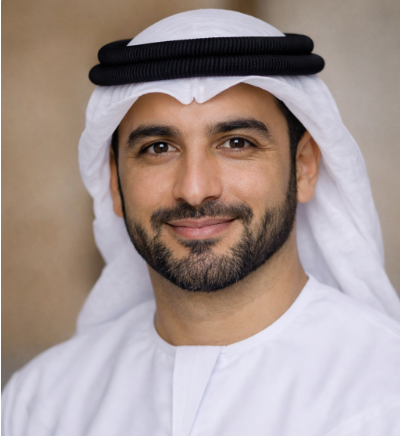
Ahmed Al-Farsi highlights standout AI innovations, startups, and use cases, spotlighting how emerging technologies are shaping businesses, creators, and the future of work.