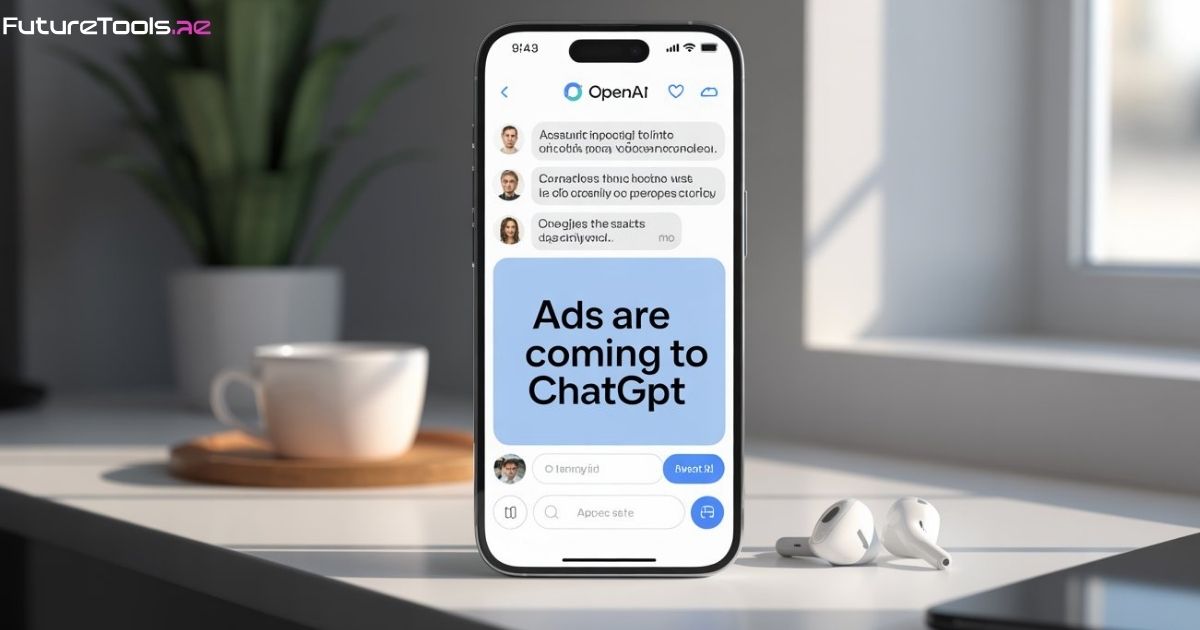
For the first time since launch, open ai ad is coming to ChatGPT at least in a limited, controlled way.
OpenAI has confirmed plans to begin internal testing of ads for Free and Go users in the United States. Ads are not live yet, and most users will never see them if they’re on a paid plan.
This is a significant shift for one of the most widely used AI tools in the world, so let’s break down what’s actually happening, what’s not, and why this move makes sense.
Open ai ads are not live yet
Only Free and Go adult users in the US may see ads during testing
Plus, Pro, Business, Enterprise, and Edu accounts will remain ad-free
Ads will not influence ChatGPT’s answers
User conversations are not shared with advertisers
Ads will be clearly labeled and shown separately from responses
There will always be an ad-free option
Now let’s go deeper.
Running ChatGPT at global scale is expensive. Very expensive.
OpenAI’s stated goal is to expand access to AI while keeping the product sustainable long term. Advertising is one way to:
Keep a free tier available
Reduce pressure to lock features behind paywalls
Support continued model improvements
Importantly, OpenAI is positioning ads as a funding mechanism, not a product driver.
They explicitly state they do not optimize for time spent, clicks, or engagement loops. The priority remains usefulness and trust.

Free users
Go users
Adults
Located in the United States
Plus
Pro
Business
Enterprise
Edu
Non-US users (for now)
If you’re eligible for testing, you’ll be notified clearly in-product. Ads won’t quietly appear without explanation.
No.
This is one of OpenAI’s strongest and most repeated commitments.
Open ai ads do not influence responses
Answers are optimized solely for helpfulness
Ads are displayed separately from chat responses
Ads are clearly labeled
In other words, ChatGPT will not:
Recommend a product because it’s paying
Adjust its tone or advice based on advertisers
Blend ads into responses
This separation is critical and OpenAI is drawing a hard line here.
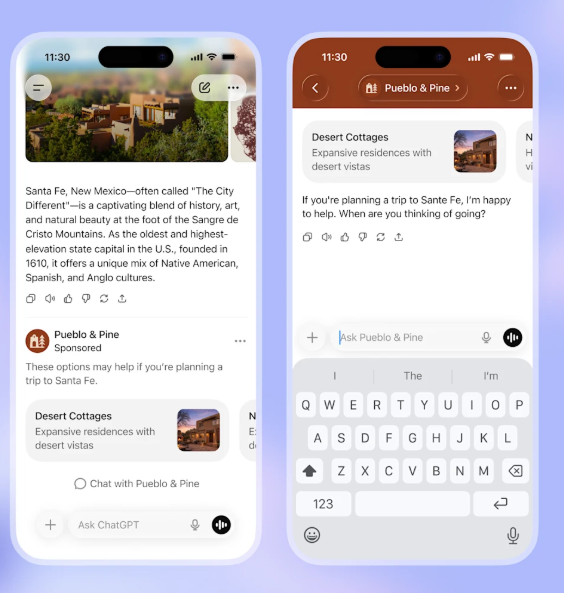
OpenAI hasn’t shared exact UI designs yet, but they’ve confirmed:
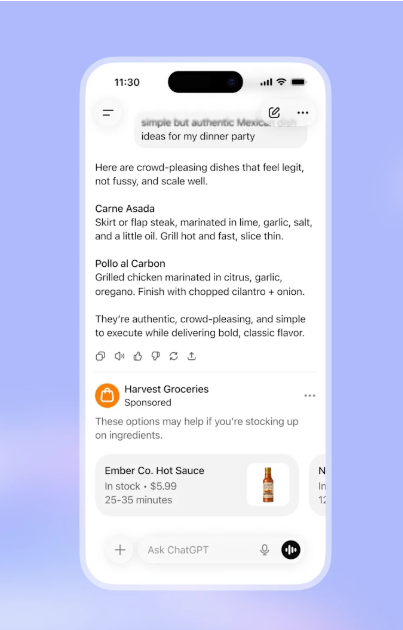
Open ai ads will be visually distinct
Ads will be clearly labeled
Ads will not be embedded inside answers
Think “sidebar” or “separate module,” not sponsored responses.
This is the biggest concern for most users and OpenAI is being unusually explicit.
Your chat history
Your prompts
Your personal conversations
Your training data
OpenAI states plainly:
We never sell your data to advertisers.
Only messages you explicitly send to them
Only if you choose to interact with an ad
No silent data sharing. No prompt scraping.
Users will have real control, including:
Turning ad personalization on or off
Clearing all data used for ads
Choosing an ad-free paid tier
OpenAI has committed that there will always be a way to use ChatGPT without ads.
This is not a “pay or be tracked” model.
Honestly? Nothing yet.
Ads are not live
Most users won’t see them
Paid users are unaffected
There’s no action required
But it’s worth paying attention, because how OpenAI handles this will influence how every major AI platform monetizes going forward.
If you’re a brand or company hoping to advertise:
OpenAI is still in early testing
No public ad platform yet
No timelines announced
They’re focused on learning before opening the doors.
Advertising in ChatGPT is coming
but carefully, slowly, and with guardrails.
If OpenAI sticks to these principles:
Clear separation
No answer manipulation
Strong privacy protections
Permanent ad-free options
…then this could be one of the least intrusive ad models on the internet.
And if it helps keep powerful AI accessible to more people, that’s a tradeoff many users will accept.
We’ll be watching closely.