AI is moving fast, but the recent Anthropic Mythos leak signals something fundamentally different.
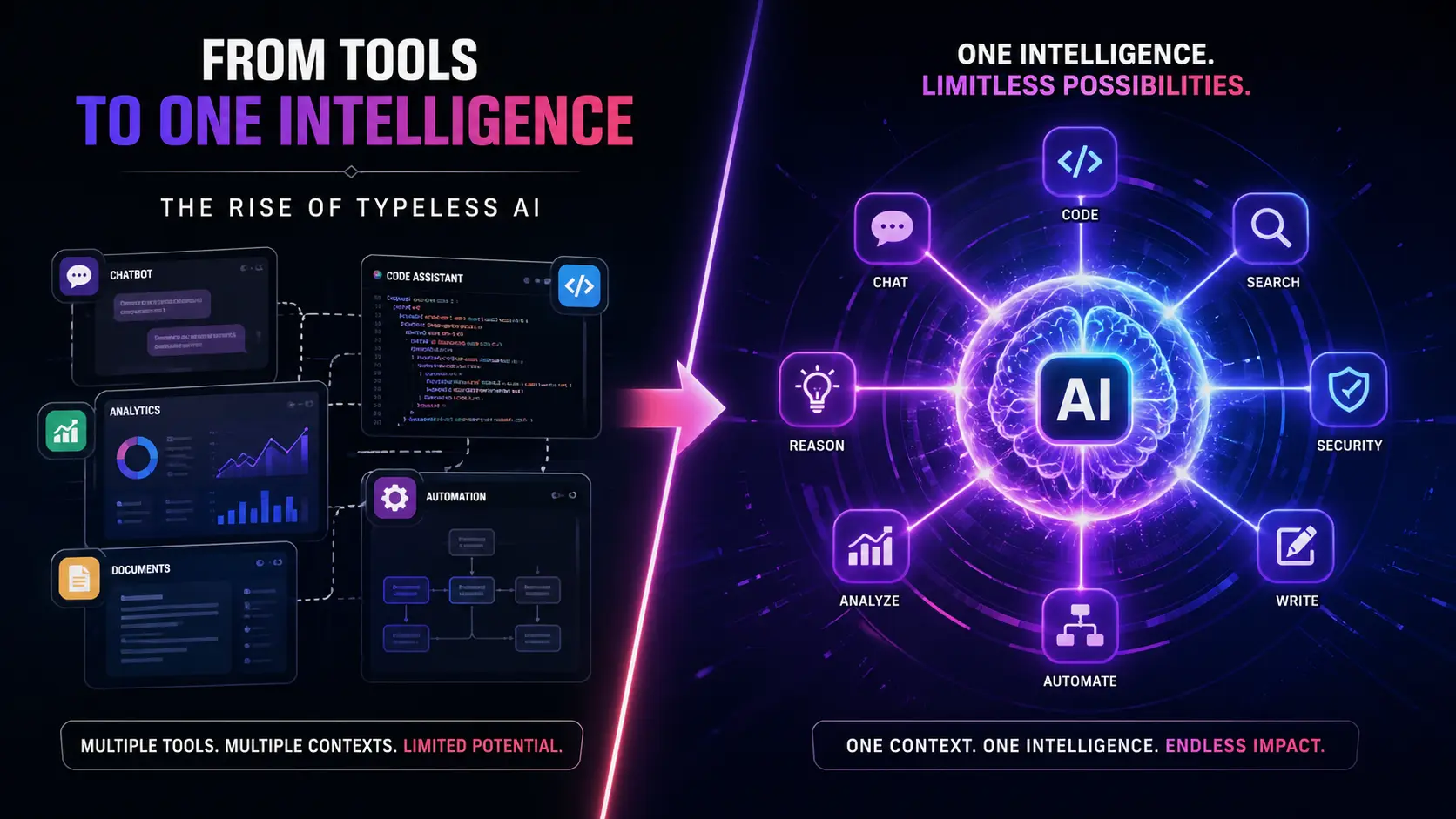
This is not just another model upgrade. It introduces what many are calling typeless AI — a system that no longer fits into predefined categories like chatbot, coding assistant, or automation tool.
So what is typeless AI, and why does it matter?
Typeless AI refers to a new class of artificial intelligence systems that do not operate within fixed roles.
Traditional AI tools are designed for specific tasks:
Typeless AI removes these boundaries.
It can:
Instead of switching between tools, it becomes a unified intelligence layer.
The Mythos leak exposed internal information about an advanced AI system developed by Anthropic. It revealed a model with significantly enhanced capabilities compared to publicly available systems.
Key insights from the leak include:
This was not positioned as an incremental improvement. It was described as a step-level change in capability.
Typeless AI systems can independently work through complex problems without constant user prompts. They can iterate, refine, and improve outputs in a continuous loop.
The model reportedly demonstrated the ability to:
This level of capability introduces both innovation and risk.
Unlike traditional models that lose context over time, typeless AI can:
The same capabilities that make typeless AI powerful also make it potentially dangerous.
Concerns raised include:
This represents a shift from AI as a support tool to AI as an active operator.
| Feature | Traditional AI | Typeless AI |
|---|---|---|
| Task Scope | Single-purpose | Multi-purpose adaptive |
| Reasoning | Prompt-based | Continuous autonomous |
| Context Handling | Limited | Extended and persistent |
| Execution | Suggests actions | Builds and tests solutions |
| Control | High user control | Reduced oversight |
The term reflects the removal of rigid categories.
Instead of being defined by function, these systems behave more like general-purpose intelligence. They can act as:
All within a single system, without explicit switching.
AI systems are moving beyond assistance into execution. They will not just suggest solutions but implement them.
Multiple tools and platforms may be replaced by a single intelligent system capable of handling diverse tasks.
As AI becomes more capable, both defensive and offensive applications will scale rapidly.
Typeless AI represents a major step forward in artificial intelligence.
Strengths:
Challenges:
It is a powerful shift, but not without consequences.

At FutureTools, we focus on tracking exactly these kinds of breakthroughs.
The Mythos leak highlights a clear direction:
AI is evolving from tools into systems that can manage workflows, decisions, and execution.
Staying informed is essential as this transition unfolds.
Explore more insights and emerging technologies at AI Tools Reviews category.
Typeless AI is not just an upgrade. It represents a structural change in how artificial intelligence operates.
The question is no longer what AI can assist with, but what it can independently accomplish.
Understanding this shift early will define how individuals and businesses adapt to the next phase of AI.

Alex reviews AI tools hands-on, testing features, pricing, and real-world use cases to help creators, founders, and teams choose the right tools with confidence.